|
|
|
David
|
|
| |
|

|
| |
| |
Other Land Rover models in IDF service |
| |
| |
| |
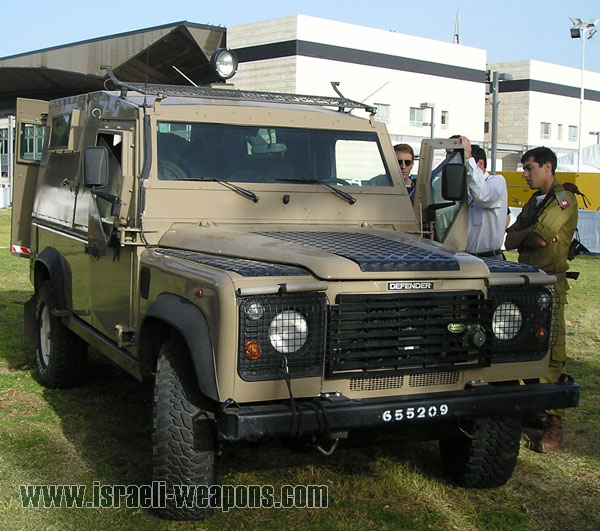
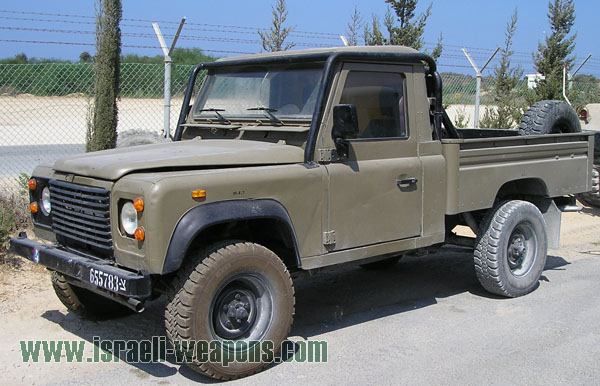
The Israel Defence Force (IDF) is currently fielding a new 4 x 4 ultra-light armoured vehicle which is to replace the armoured Automotive Industries M240 Sufa. Dubbed the 'David', the vehicle that is now entering service in the IDF is based on a Land Rover Defender 110. The ‘David’ is also referred to as an ULAV- Ultra Light Armored Vehicle and is designed for urban low intensity conflict to operate in densely populated areas and tight streets and alleys. Being considerably shorter, lighter and narrower than the up-armored HMMWV variants such as the US made M1114 and the Israeli Plasan Sasa versions, are features that make the ‘David’ ideal for its intended role. |
| |
 |
| |
| |
| Developmental History
|
| |
The ‘David’ has been designed by MDT’s Israeli plant in Lod in close cooperation with the Israel Defence Forces (IDF) and was launched in 2004 in Washington D.C. .The concept is designed to both fit onto the Land Rover Defender as well as the Mercedes/Benz G/Wagen. Some Land Rover based prototypes, which were probably built in Israel, were delivered in 2005 for field testing. In April and September two orders were placed for the delivery of the Land Rover based ‘David’, worth 32 million US$, last vehicles are expected to be delivered in July 2007. The ‘David’, although designed and developed in Israel, will be built in MDT’s US facility in Auburn, Alabama, USA, making good use of Foreign Military Assistance-funds of the US Government.
A good way to tell the original prototypes from the production vehicles is the grill. The prototypes had a grill of new design with heavy vertically placed bars, while the production vehicles retain the original Defender grills. Also the rear light units differed from the original Defender units, which are again found on the production ‘Davids’.
|
| |
 |
| |
| |
|
Interior
|
| |
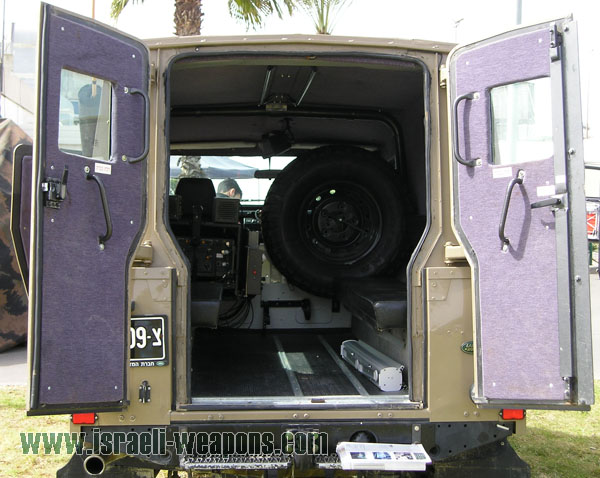
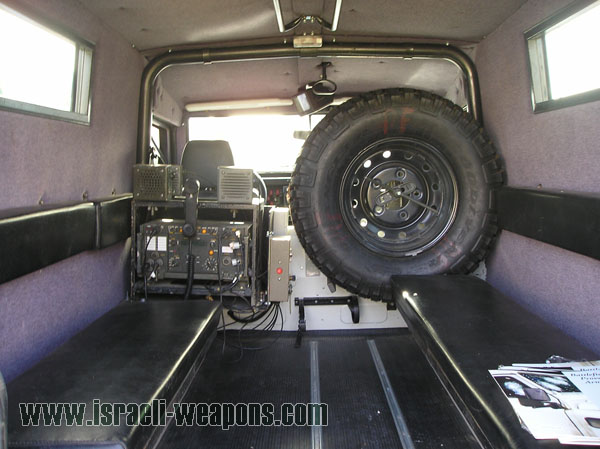
The interior consists of two forward seats (driver and commander) and two benches to both sides. Behind the driver’s seat a radio rack is installed and on the opposite side the spare wheel is carried. Internal room is sufficient for it to carry up to 6 soldiers in full battle gear. Its wide doors make for fast entry and exit of troops on a platform that can easily get in and out of tight urban streets and alleys. |
| |
|
| |
| |
|
Protection
|
| |
Gun ports (360°) allow for accurate return fire as soldiers have full view of gun sites and surrounding area through the armored windows. Protection against assault rifles at point blank velocities, limited protection against I.E.D.s (incendiary explosive devices), roof protection designed to defeat typical threats fired at very short range and augmented floor protection. The vehicle’s tires are fitted with run-flat inserts to maintain mobility even with deflated or damaged tires. A widely catalogued feature are the pivoting windows of the forward doors. |
| |
 |
| |
Length |
4200 mm |
Width |
1598 mm |
Height |
1925 mm |
Wheelbase |
2795 mm |
Gross Vehicle Weight |
3,600 kg |
Engine |
Diesel, Td5 2.5 liter, turbo charged, Max.power @4200 rpm - 90kW (122 bhp), Max.torque @1950 rpm -300Nm (221 lb/ft) |
Drive, Transmission |
4X4, 5 speed, manual |
Tires |
5 Goodyear MT/R 265/75 R16 with run-flat inserts |
No. of crew |
Driver, commander and up to 4 combat ready troops |
Armoring level |
- 360º perimeter, defeats military assault rifles at point blank velocities – 7.62X39 AK 47 M1943 (Opaque defeats AP), 5.56 M-16 (M193 and AP SS109) and 7.62X51 M80 NATO ball. Limited perimeter protection against IEDs (Improvised Explosive Devices).
- Roof protection designed to defeat above threats at shooting range of 10 meters, at 68 degrees NATO.
- Floor protection against 2 X DM51 grenades.
|
Air conditioning |
Front unit |
|
| |
|
Special thanks to Erik Hendriks. |

|
|