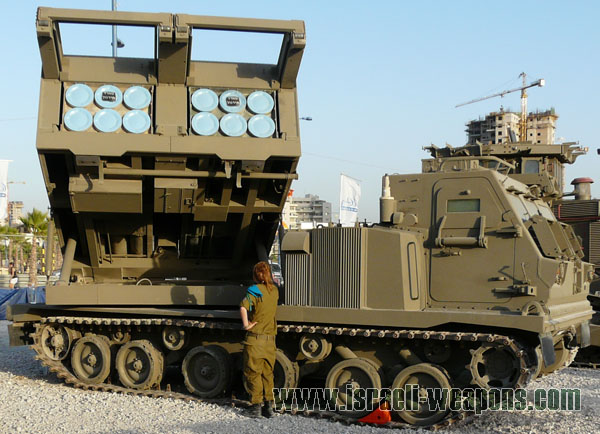
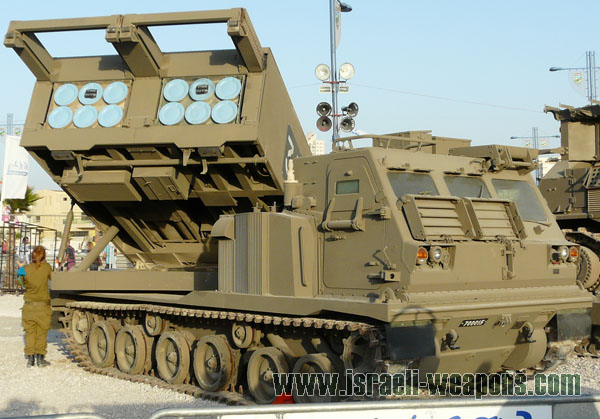
M270 MLRS
Multiple Launch Rocket System


The Multiple Launch Rocket System (MLRS) consists of the M270 and M270A1 tracked launchers capable of launching two munition pods of six rockets or one Army TACMS missile per each pod; the High Mobility Artillery Rocket System (HIMARS) wheeled launcher capable of launching one pod of six rockets or one Army TACMS missile; the M26 tactical free flight rocket and M28 training free flight rocket; Reduced Range Practice Rocket (RRPR); the M26A1 and M26A2 Extended Range free flight rocket; XM30 Guided MLRS Rocket (GMLRS); MLRS command and control systems, training devices and simulations. There are also ongoing requirements generation efforts for a GMLRS-Unitary warhead horizontal technology integration (HTI) and Future Launcher & Rocket as part of Networked Fires for the Future Combat System (FCS). 

The Multiple Launch Rocket System (MLRS) provides the Army an all-weather, indirect, area fire weapon system to strike counterfire, air defense, armored formations, and other high-payoff targets at all depths of the tactical battlefield. Primary missions of MLRS include the suppression, neutralization and destruction of threat fire support and forward area air defense targets. 

The Multiple Launch Rocket System is a versatile weapon system that supplements traditional cannon artillery fires by delivering large volumes of firepower in a short time against critical, time-sensitive targets. These targets often include enemy artillery, air defense systems, mechanized units, and personnel. MLRS units can use their system's "shoot and scoot" capability to survive while providing fire support for attacking manuever elements. MLRS is not intended to replace cannon artillery, but has been designed to complement it. 

MLRS performed extremely well in Operation Desert Storm (ODS) by USA in which significant numbers of launchers were deployed. All operational requirement were met and, in most cases, exceeded levels for readiness, reliability and maintainability. MLRS units from the United Kingdom were also involved in ODS and proved the value of this multi-national system. The new upgrade MLRS (Deep Attack Launcher) also demonstrated its enormous capability during the first operational firings of the longer range ATACMS. 

The Army has initiated an extensive improvements program to enhance MLRS's basic capability. The improvements are in three areas--an extended range rocket (from 32 kilometers to 50 kilometers), an improved fire control system, and an improved launcher mechanical system. The extended range rocket has a reduced payload of M77 submunitions and a longer rocket motor to enable attainment of the additional 18 kilometers of flight. The improved fire control system includes a meteorological sensor, a positioning navigation unit combined with global positioning system and a new launcher interface unit with increased throughput capacities in the main and communication processors. The improved launcher mechanical systems consists of non-developmental item improvements to the elevation transmission, elevation motor, azimuth motor and motor control.

Israel purchase 48 M270 MLRS in late 90s from US. In Israeli improved M270 MLRS there is TCS systems for extra range and accuracy.


The Trajectory Correction System (TCS) improves the accuracy of free flight artillery rockets to that of conventional tube artillery. By providing in-flight trajectory correction, TCS enables the optimal deployment of smart munitions, such as SADARM or scatterable mines, that require close proximity to the target to be effective. Suitable for implementation on IMI's entire artillery rocket family, it has already been adapted to other artillery rocket systems such as the MLRS.


IMI ends development of MLRS upgrade
 
IMI has completed development of an upgrade of the U.S.-origin Multiple Launch Rocket System.

IMI completed tests to verify its system to improve the accuracy of Lockheed Martin's 227 mm MLRS. IMI's Trajectory Correction System (TCS) has been termed as a most cost-effective solution than global-positioning systems meant to improve the trajectory of guided rockets used for Lockheed Martin's platform. Industry sources said the Israeli military plans to introduce the TCS into its 64 MLRS launchers over the next year. They said the system has also garnered interest from unspecified foreign militaries.

The TCS was developed by IMI in cooperation with subcontractor Elisra Electronic Systems. Lockheed Martin Missiles and Fire Control, based in Orlando, Fla., facilitated the tests and produced the required rockets under a $50 million contract signed in 1998.


Crew
3
Enter into service
Late 90s
Length 
7 m
Height 
2.6 m (5 m elevated)
Width
3 m
Weight

Loaded  25 tons
Empty  20 tons
Armament
227mm
Ammunition storage
12x227mm
Missile range
10-32 km
Road range
500 km
Speed
60 kph