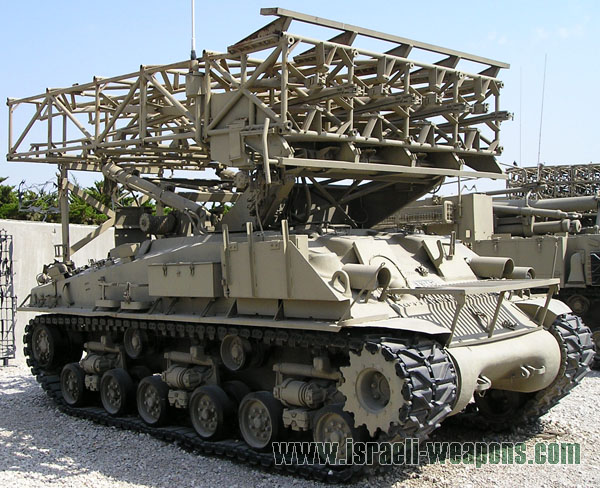
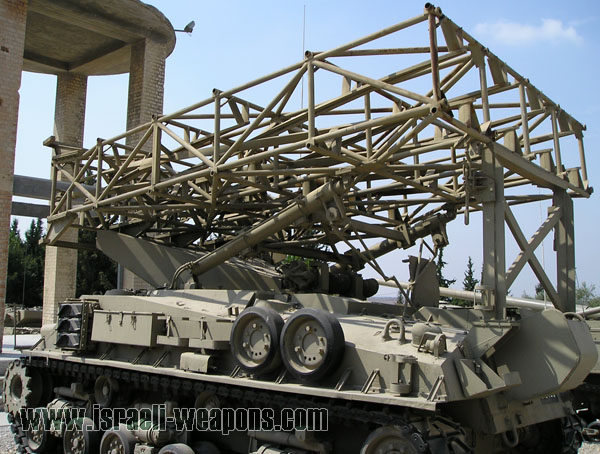
MAR-290 (Sherman Chassis)


The development and production of the "Katyusha" rocket system, were definitely a major step forward in the building of artillery power, but an insufficient one. This became very clear in the War of Attrition when Egypt had more artillery power than Israel, who answered this problem mainly with its superior air-force.

Soon enough it was cleared that the Land corps needed an advanced array of long-range artillery rockets (the range of the Katyusha was 10km), to answer the IDF's combat needs and to allow enemy-depth fire power.

In 1968, one of NATO's states addressed the IMI with a request in which IMI would develop for it a medium-range rocket engine. Following the state's request, came the development , which was sponsored by that state and was a boost to IMI's designing concern and for the IDF as well, who would benefit a foreign state's financed development. The system was developed without any help from outside.

That way, for the first time in the history of Israel's defense system, an artillery rocket genuine weapons system was developed, manufactured and supplied to the Artillery corps, IMI being the main contractor. The Ordnance corps was responsible for testing and was a secondary contractor.

This long-range artillery system led to the development of an 290mm rocket indigenous system by IMI, which was mainly used in the Peace For Galilee (1982).

The launcher vehicle, which carried four rockets, was based on the Sherman chassis. Later, another version of the MAR-290 that was based on Centurion chassis appeared.

This rocket system development proved that a full cooperation between all factors - the Military industries, weapons designers, and the "Technion" Engineers (derived from academy) were the key to success in this field.

 
Armament
290mm
Ammunition storage
4x290mm
Range
22 km
Weight
29 tons 
Engine
460 hp