F-16


IAF - Israeli Air Force


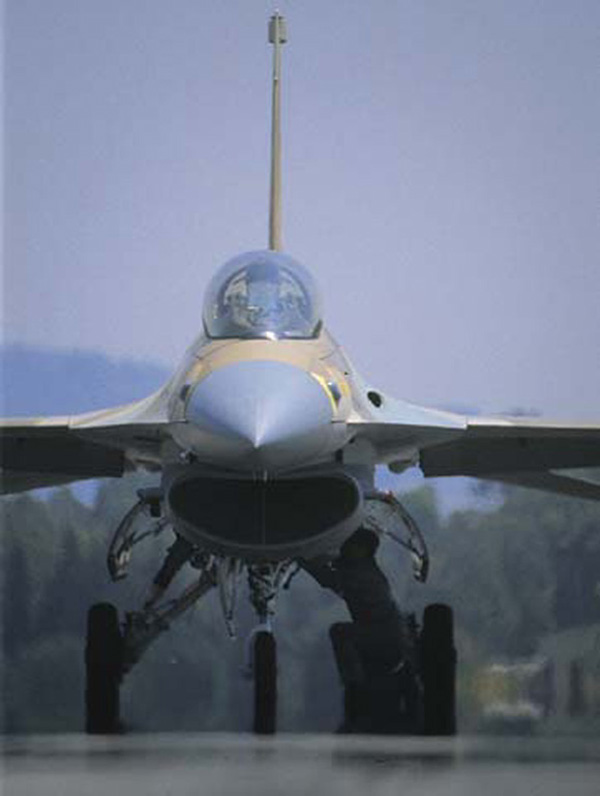
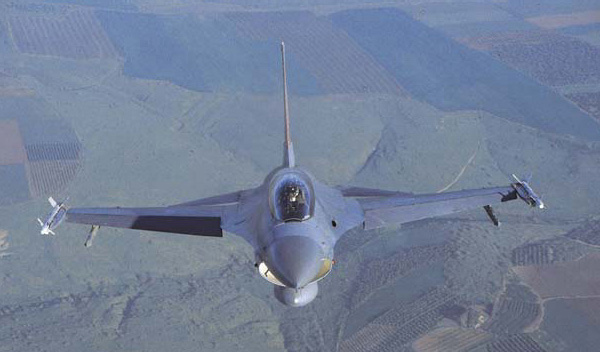
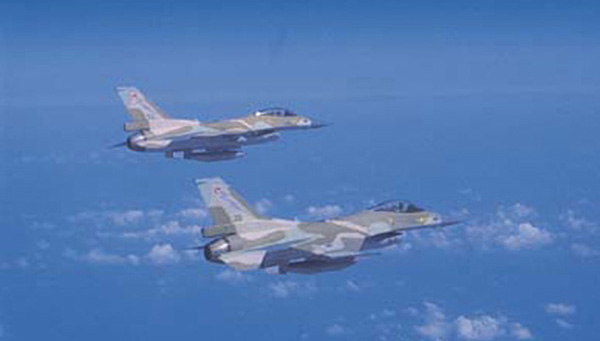
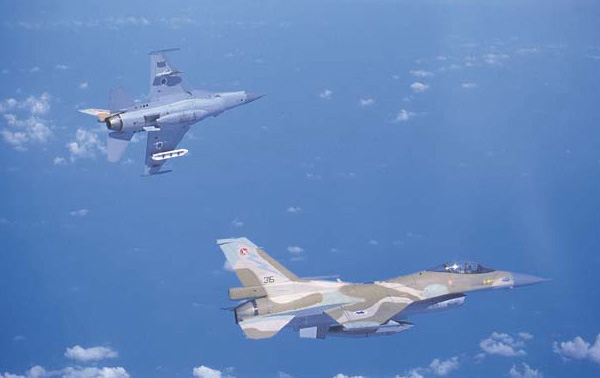
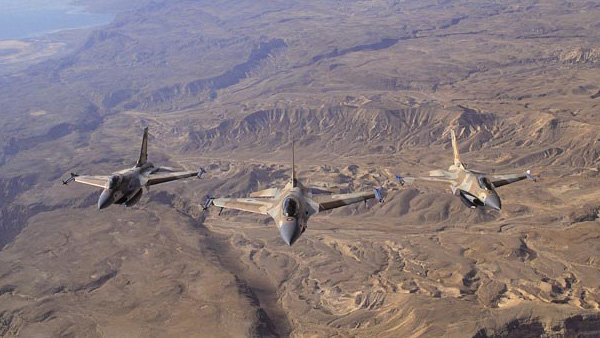
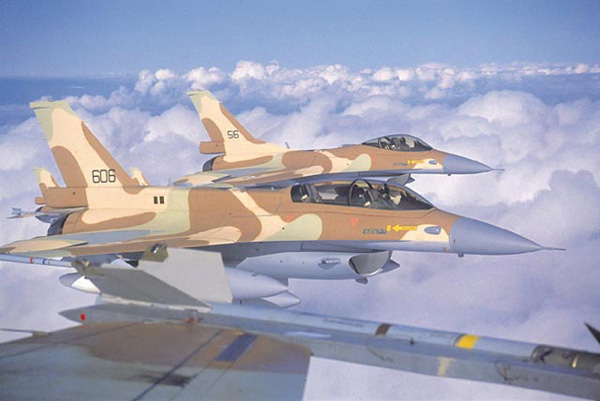
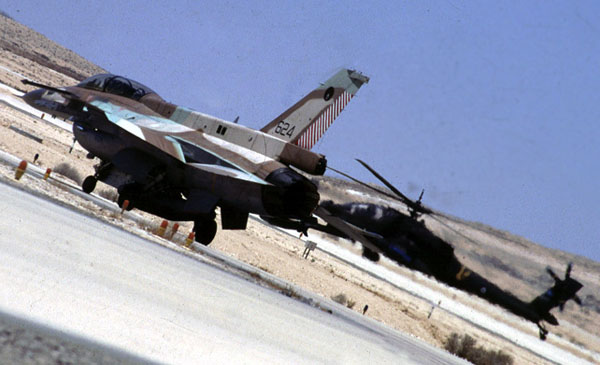
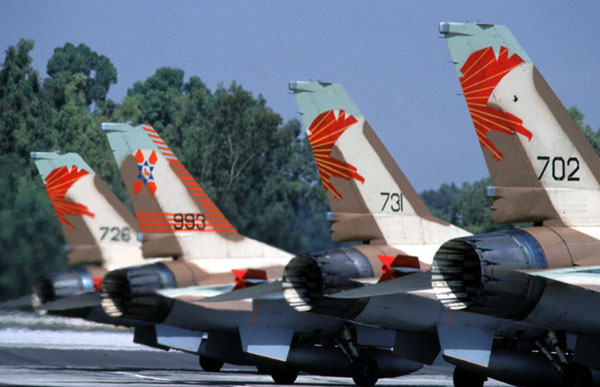
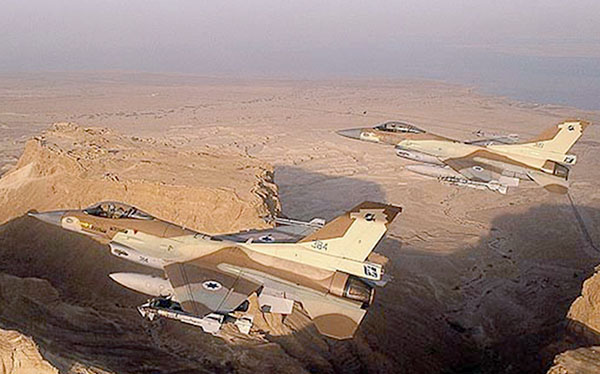
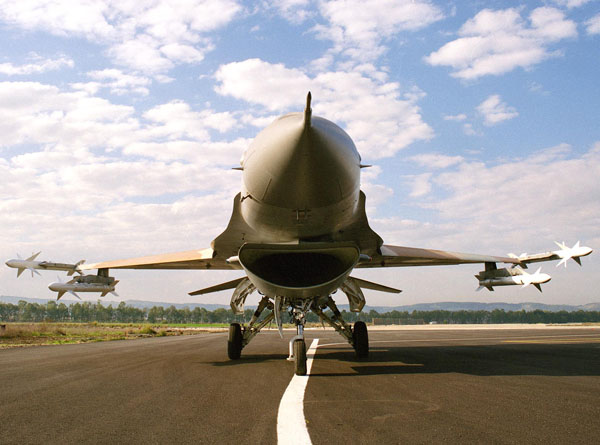
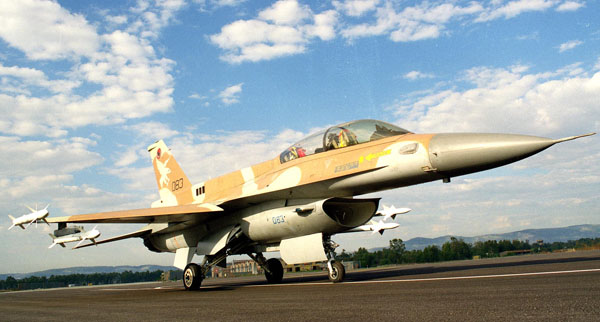
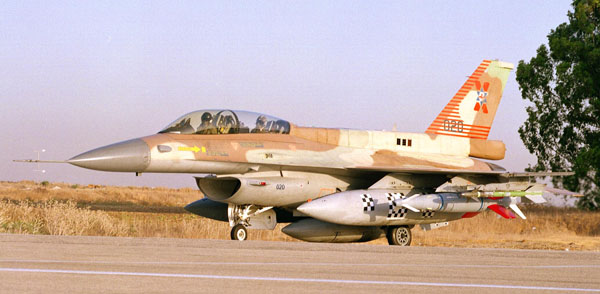
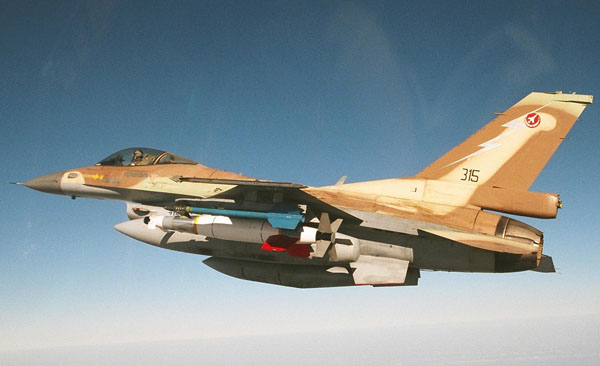
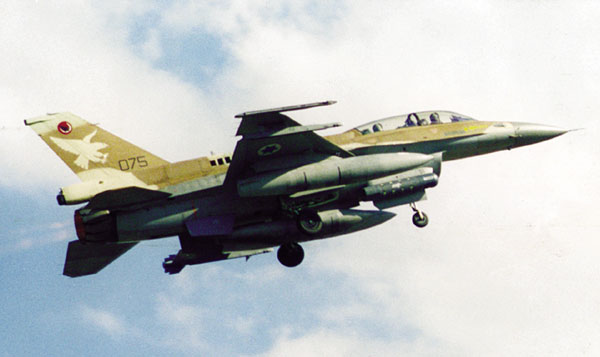
A multi-role fighter that serves Heyl Ha'avir in attack and interception missions. The plane entered service in 1980, and forms the IAF's backbone to this day. The F-16's carry out a wide range of complex missions, from attacking deep in enemy territory to air superiority, and have built up an extraordinary record of acheivement in Heyl Ha'avir.

A year after their arrival the planes already attacked the Iraqi nuclear reactor, destroying it completely. In Operation Peace for the Galilee they achieved air dominance by shooting down about 40 Syrian planes, in the course of the operation against the SAM's in the Beka'a valley.

The F-16's participate in numerous operations, on a variety of missions, to this day.


Models


F-16A

The first single seat model of the F-16, designated for assault and interception. Took off for its debut flight in 1978. the plane was purchased by many airforces in the world, among them - the IAF.

F-16B

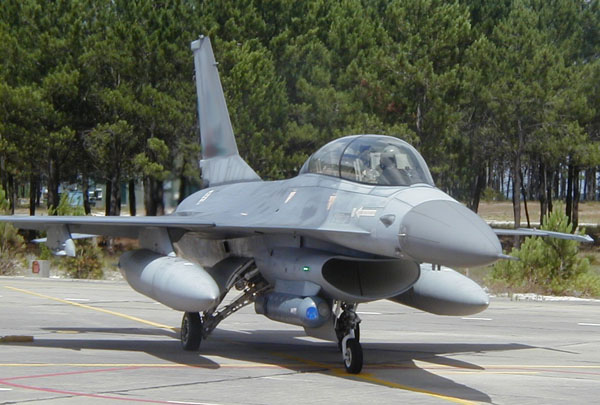
The double seat model of the F-16, designated for training and instruction. Besides the extra seat, the double seat model is identical to the single seat model in its systems, engine and flight performance.

F-16C

The improved model of the single seat F-16. Took off for its debut flight in 1984. As apposed to the A model, the C model was equipped with advanced avionics systems and a more powerful engine. The plane's structure was strengthened to enlarge its ability to carry advanced armaments. These capabilities made the C model better than its previous models in air-ground missions, as well as in air-air missions, and it excelled in night activities and poor weather.

February 9th 1987 , the three first F-16Cs land in Israel. This is the first batch out of a total 75 F-16 C and D models Israel is to receive in the course of this year and the next.

F-16D

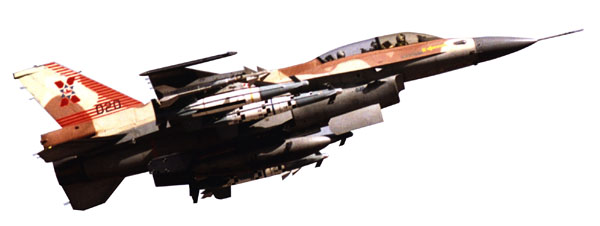
The double seat model, based on the F-16C. took off for its debut flight in 1984. As the C models, the D model is heavier than the first F-16 planes, but it makes up for that with its carrying capabilities. The plane serves in the United States and Israel air forces, as well as a number of air forces around the world.

F-16I

The F-16I is a heavily modified two seat version of the U.S. Air Force's F-16D Block 50/52-series fighter. In addition to the new and more powerful Pratt & Whitney F100-PW-229 engine, the F-16I boasts numerous internal and external advancements and modifications. For example, the Sufa has been customized with new avionic technologies, internally mounted FLIR (forward looking infrared) viewers, and cutting edge weapon system hardware provided by the Israeli defense company Lahav - a division of Israel Aircraft Industries.


Model Block
Quantity
Serials Delivered
F-16A
Block 5
18
100/138
1980-1981
F-16B
Block 5
8
001/017
1980-1981
F-16A
Block 10
49
219/299
1980-1981
F-16C
Block 30
51
301/398
1986-1987
F-16D
Block 30
24
020/088
1987-1988
F-16C
Block 40
30
502/558
1991-1993
F-16D
Block 40
30
601/687
1991-1993
F-16A
block 1
3
700/799
1994
F-16B
Block 1
2
900/999
1994
F-16A
Block 5
1
700/799
1994
F-16B
Block 5
7
900/999
1994
F-16A
Block 10
32
700/799
1994
F-16B
Block 10
5
900/999
1994
F-16D
Block 52
102
400/499 & 800/899
2003-2009
 
 
Netz (F-16A/B)


F-16A


F-16B


Seventeen technical modifications, designed by the IAF and Israeli military industries, were made to the Israeli F-16A/B's. Most of them in the software and in the mission computers, which enabled the F-16 to operate the unique weapon systems. Fin-root fairings on early F-16A's house the Rapport system.

In 1992 all IAF F-16A/B's (excluding the latest batch of Netz 2 aircraft) went into an upgrade phase at Israeli Aircraft Industries (IAI), where wings were structurally reinforced, and Elbit's advanced flight and mission management system was installed. By the end of this phase, all F-16A/B's were system equaled with the F-16C's; however, the engine remained the original F-100.


Barak (F-16C/D)


F-16C


F-16D


Externally, the Israeli F-16C differs from other F-16C's by having an extension to the base of its vertical stabilizer, similar to the Norwegian F-16s parachute brake compartment; however, no parachutes are used on IAF F-16s. Israeli F-16s have extensive local modifications, with different avionics fits and higher gross weights, requiring changes in the landing gear and the use of new wheels. The maximum all-up weight of an IsraeliF-16 is 48,000 pounds, as compared to 42,300 pounds for a USAF Block 40 F-16C. The third batch of F-16C/D's is fitted with Elta's EL/L-8240 ECM, replacing Lockheed Martin Defense Systems' (LMDS, formerly Loral) AN/ALQ-178 Rapport III internal ECM. F-16C's appear to have larger navigation lights mountings on the intake. These most likely house electronics. The F-16C/D's ordered to compensate for the cancelled Lavi Project received Israeli ECM systems (manufactured by Elisra), and flight management computers (made by Elbit).

While the F-16B is a two seat version of the F-16A used for pilot conversion, the Israeli F-16D is completely different from the F-16C. The back seat is reserved for the F-16s Weapon System Operator, just as one can find at the F-4 Phantom. Externally, this fighter differs from other F-16D's by having a boxlike extension from the cockpit to the vertical stabilizer, referred to as a dorsal spine.

The dorsal fairing was designed, mocked up, fabricated and installed during regular routine assembly while these aircraft were on the production line in Fort Worth. At no time has IAI had anything to do with initial design, fabrication of assemblies or production installation of any dorsal assemblies. The dorsal spine is believed to accommodate Wild Weasel equipment (amongst others Elisra's SPS-3000 self-protection jammer) which detects emissions from enemy radar sites and pinpoints their locations, and specialized weapon delivery systems, such as 'smart bombs' guided using the back seat's side stick for control. The IDFAF would confirm only that this space is filled with various electronic systems.

According to the IDFAF Magazine, this version of the F-16D is much heavier than the 'standard' production F-16D's. Its empty weight is 9,525 kg, while the standard version weighs just 7,900 kg. The maximum takeoff weight was extended to 21,770 kg - 4,760 kg more than the standard version, a fact made possible by modifications made to the landing gear. The extent of the modifications called for a different (non-official) model designation, hence the Israeli F-16D was designated IF-16D. As the F-16C's in service by the IDFAF, the IF-16D is powered by a General Electric F110-GE-100 engine, with an enlarged air intake.


Development


The F-16 was developed in the 70's, as part of the American response to the Soviets' numerical advantage in fighter planes. Since the F-15's price tag made it impossible to purchase in large numbers, the idea was to develop a less expensive plane, that could replace the F-15 in most of its missions, without necessarily being able to match it in the entire spectrum of its capabilities. A tender for offers to produce such a plane was issued by the US DOD in 1972. The specified requirements were of a general nature, giving the planners maximal freedom to come up with their own ideas. General Dynamics and Northrop both made bids, and developed the prototypes YF-16 and YF-17, respectively. In the end - in 1975 - the USAF preferred General Dynamics' model because of its agility, maneuverability, better acceleration and operational range.

The company carried on with the engineering development research that was needed in order for turning the
F-16 into a production fighter. The USAF was the first to purchase the new plane, and was followed by other air forces. The F-16 became an multi-national plane, produced both in and outside of the USA.

Over the years, the Fighting Falcon gained its standing as the most ubiquitous and prominent Western fighter of the late 20th century.

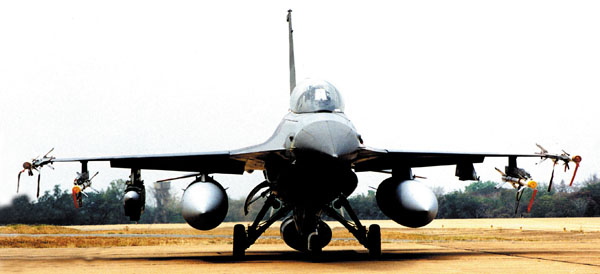
General Dynamics' engineers had fully utilized the freedom of action given them, and designed a plane with a sleek aerodynamic shape that improves flight quality and ability to react in combat situations. An intake was placed at the plane's belly, for improved maneuverability at attack angle. Narrow, elongated extension surfaces between the nose and wing roots increase elevation and serve to stabilize the plane. In addition, a 'fly by wire' digital flight control system improves maneuverability, while the bubble canopy affords the pilot an unobstructed field of vision - quite an advantage in a dogfight.

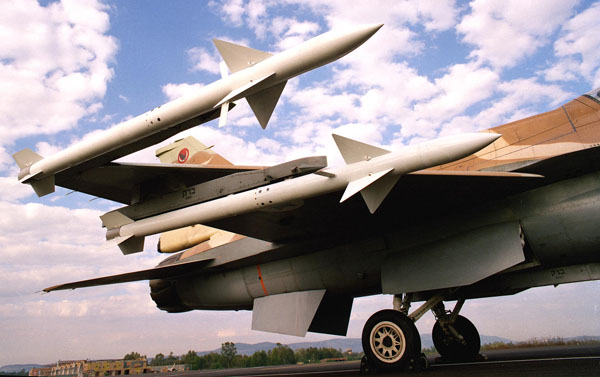
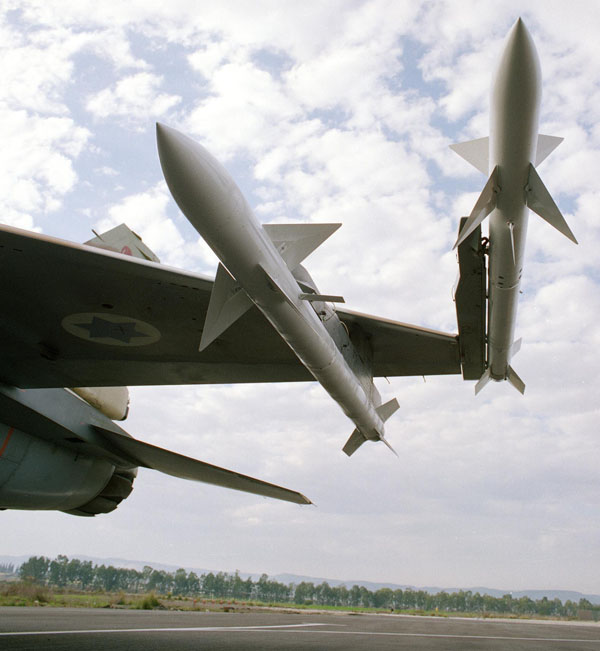
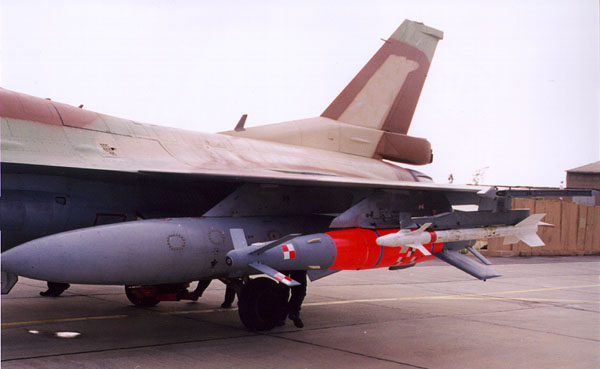
As a multi-role fighter, the F-16 was fitted, over the years, for carrying a vastly diverse array of rockets, bombs and cannon, with a total weight of almost seven tons. In air-to-air missions it carries Sidewinder,
Python-3, Python-4 and Python-5 missiles, in addition to its internal 6 barrelled Vulcan 20 mm. cannon. On air-to-ground missions, the Fighting Falcon can carry air-ground missiles, guided bombs and iron bombs (see below).


History


The IAF shows interest in a new plane: the F-16

Heyl Ha'avir evinced interest in the F-16 when it was just in its early development stages. The new plane's advantages were not lost upon the IAF top brass, who intended for the F-16 to become the IAF's first-line fighter in the early 1980's. The initial contacts regarding purchase of the plane were held in September of 1975. Following a meeting in the Pentagon between the Israeli Minister of Defense, Shim'on Peres, and his American counterpart, James Schlesinger, the US expressed its agreement, in principle, to supply Israel with 100 planes. Israel was not content with receiving ready made planes, and asked for a license to manufacture key parts of the plane in Israel, or even to fully assemble it in Israel. This request met heated opposition in the American administration. The US contended that Israel had, in the past, made use of American technology for independent production of weapons, in a way that hurt American export interests.

The IAF Commander, General Benny Peled, visited the US in August of 1976, and received a full briefing about the F-16 from a team of senior USAF officers. In the end, a request was filed for purchasing the planes regardless of the production license issue, and the US agreed to sell Israel 250 planes. In 1975 this number was scaled down to 150, because the US refused to set up an assembly line in Israel. In the end, the IAF received 75 planes.

The deal is done

On February 14th 1978 the US announced a package deal for selling arms to Israel, Egypt and Saudi Arabia, which included the sale of 75 F-16's and F-15s to Israel in return for $1.9 billion. Israel was scheduled to receive the planes in mid-1981. Following the Shah's downfall and the rise of the Khomeini regime in Iran, the supply of 160 F-16's to Iran was canceled, and the Americans offered the Israelis their planes months before schedule.

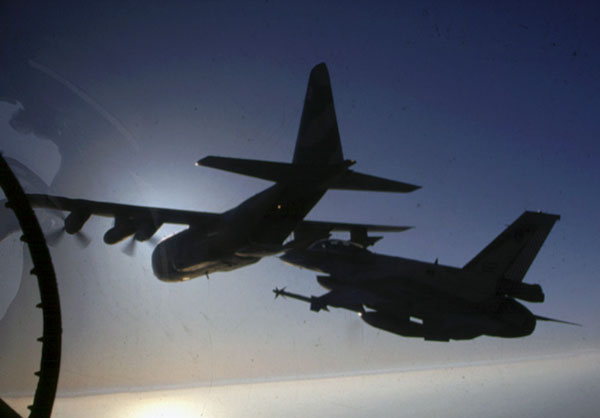
The first four F-16's - two single seat A models and two tandem seat B models - landed in Israel on July 2nd 1980, and received a ceremonial welcome in an IAF base in northern Israel. The planes had been flown in to Israel in a flight that lasted 11 hours, with American pilots at the controls. They had been accompanied by a Phantom, and had carried out several midair refuelings. In Israel they were given the Hebrew name 'Netz'.


The first kill - and Osirak

In April of 1981 the F-16 accomplished its first kill ever, when Maj. Raz's plane shot down a Syrian Mi-8 helicopter. Later that day another F-16 shot down yet another Mi-8. On July 14th of that year the first fighter was shot down: Amir Nahumi, commander of the F-16 Squadron, shot down a Syrian MiG-21 in a dogfight.

About a year after the arrival of the first F-16's, on June 7th 1981, a flight of eight F-16's, escorted by six F-15s, attacked the Iraqi nuclear plant 'Osirak' a short time before it was to become operational. This operation - code named 'Opera' - temporarily removed the Iraqi nuclear threat.


'Peace for the Galilee', and a new arms deal

On the 4th day of the 'Peace for the Galilee' campaign, on July 9th 1982, F-16's participated in the destruction of Syria's SAM's in the Lebanese Beka'a Valley. Israel's F-16's shot down about 40 Syrian fighters in the course of the war - most of them during the operation against the SAM's.

In the months that preceded 'Peace for the Galilee', the F-16's had shot down five Syrian fighters: three MiG-21's and two MiG-23's. It was during this time that negotiations began for the purchase of 75 more F-16 C and D models, but this was postponed because of the war in Lebanon, and was only finalized in August of 1983. The $3 billion deal was the largest-scale arms purchase Israel had ever carried out. It included a commitment by General Dynamics, the American manufacturer of the F-16, to carry out reciprocal purchases totalling $300 million in Israel. These purchases included deals with private Israeli companies as well as production orders from the IAI and from Israel's Military Industry.

'Barak'

The first three F-16C's arrived on February 9th 1987, flown by American pilots. They landed at an IAF base in northern Israel and were given the Hebrew name 'Barak'.

The F-16 C/D models have several conspicuous improvements that differentiate them from the A/B models. They have more powerful engine with greater static thrust, as well as improved radar, an advanced cockpit with two multi-function displays (MFD's) and a holographic wide angle heads-up display (HUD), a stronger airframe affording greater payload carry capacity, improved electronic warfare (EW), 'fly-by-wire' controls and advanced weapons systems, night flight and night fighting systems as well as other avionics.


A squadron is born

A new F-16 squadron was established on August 1st 1994, and was equipped by 50 F-16 A/B planes that Israel received from the USAF surplus. A special IAF team had tested and picked the planes, some of which had participated in Desert Storm. The F-16's, all of which were at least 10 years old, were rigorously tested upon their arrival in Israel, fully disassembled and only reassembled after all their parts had been evaluated. They then underwent improvement, which mostly meant engine upgrades and retrofitting of unique IAF systems. After being absorbed in the squadron, they underwent another series of test flights and weapons tests.

A year after they equipped the squadron, the planes had their first day in battle, in the ranks of the IAF: the
F-16's carried out attack sorties against several targets manned by Ahmed Jibril's men, around Nu'eimeh and Damur in Southern Lebanon.

'Grapes of Wrath': F-16's over Beirut

In Operation 'Grapes of Wrath' (1996) the IDF and its air arm, Heyl Ha'avir, targeted terrorists in Southern Lebanon, with the purpose of halting 'Katyusha' rocket fire against Israeli civilians in the northern Galilee. In the course of the operation, the IAF's new F-16 squadron attacked Beirut's electrical power plant. The mission was to hit only specific sections of the plant, plunging parts of Beirut into darkness, in retaliation for the Katyushas which had caused a power outage in Kiryat Shmonah the previous day. This was the first time since 'Peace for the Galilee' that the IAF operated in Beirut.


The First Kill


About four years after the first F-15s entered service with the IAF, the first multi-role F-16s were welcomed into the 'First Jet' Squadron. A bar three months later - the F-16 squadron was operational. The question on the pilots' minds was the one which has always troubled new squadrons: who would score the first victory?

Maj. Raz delivered the answer to that question on April 28th 1981. It was a time of heightened tensions with the Syrians, who had begun sending ground forces and helicopters to the Jebel Snin area. That morning, fresh reports came in about movement of Syrian transport helicoters into the area. The squadron commander and Maj. Raz - who was then a young and inexperienced Lieutenant - were on interception readiness duty.

Raz: "At 09:00 we suddenly heard an earsplitting siren wail. We ran like madmen to our planes, revved them up and took off. We flew over the sea at very low altitude, west of Beirut. When we were right over Beirut, we pulled upward to an altitude of 20,000 feet. The squadron commander experienced a radar malfunction, and I thus became the lead plane, since I was supplying all of the data. We passed real close to Riak airfield in the Lebanese Beka'a Valley. We flew a bit lower, and divided the work between us: the squadron commander was in charge of the communication with the control tower, and I relayed the data to him.

"My radar picked up a distant target. I locked onto it and we flew in its direction. I waited for permission to shoot down but it was slow in coming - I was finding it hard to maintain the missile lock. Then the lock disappeared. Now that there was no missile lock, no permission to shoot down and no permission to enter the area, we turned and headed towards a point to the south and west of Beirut. But then I picked up a target on the radar again.

"The target was moving 10 miles north of Riak airfield, towards Jebel Snin. At long last, we received permission to enter the area and permission to shoot down. We flew at low altitude, at Mach 0.9, in the target's direction. I noticed that the lock wasn't very stable. There wasn't that much time left for thinking because we were nearing the minimum range for missile launch. I wasn't sure that it was a good launch, but I launched anyways. It was the first time in my life that I'd seen a missile launched and it simply hypnotized me.

The missile left the plane on the left side with a whoosh, and I followed it with my glance. It veered downward, hit the ground and entered a small shack, and sent it up in the air. Later that day, the announcer on the news said that 'our forces had fired rockets in the area'. Well - those so-called rockets were my misguided missile and nothing else.

"By now I could see the target clearly: a Syrian helicopter, though I still couldn't identify the model. It later turned out to be an Mi-8. I passed over him, pulled at a very high speed and tried to prepare for a second missile launch. The squadron commander overtook me and I suddenly noticed he was using his cannon to strafe the helicopter. I hadn't even thought of using the cannon until that point. The Syrian pilot executed a turn, meanwhile, and I saw the bursts of cannon fire shooting up the dirt just behind him.

"I was flying at 12,000 feet when the controller suddenly told us to break off contact and fly westward. I switched to cannon sights and went for the helicopter again, in a dive run. The controller intervened again and demanded we break off contact immediately. It turned out there was a group of unfriendly MiGs about 25 km. east of us. I told the controller 'straight away' and galloped in onto the chopper at a speed of 570 knots from west to east, and pulled up behind him. It was flying about 10 meters above the ground and I put my sights on his tail. I opened fire.

"I fired a long burst, at the end of which a giant flame burst from the helicopter, which fell to the ground and fell apart, billowing heavy smoke.

"The controller instructed us to disengage, again, and I informed him of the kill. I executed a very sharp turn westward - about an 8 G turn - and the squadron commander said on the radio: "very nice, Two".

We ascended to higher altitude and flew homewards. We did a tight buzz over the base. Virtually the entire base was waiting for us on the ground. They'd been waiting for a victory for a long time. Everyone looked at the wing that had a missile missing and at the black soot that the cannon bursts had left behind. They lifted me up on their shoulders, stood around me in a circle and bombarded me with questions. It was a great occasion, no doubt about it. And let's not forget, the unspoken rivalry with the F-15 also played a part in our pride.

"All things said, it's a lot harder to shoot down a helicopter than a combat jet. Obviously, the risk posed by a chopper is lower, but your chances at scoring a hit consist of a series of short flyovers, and you always stand the risk of losing the target after completing the run.

"That same day, another Mi-8 was shot down by the squadron's deputy commander. The following day, the Syrians advanced SAMs into the Beka'a - a move which was one of the factors that brought about the start of the Lebanon War. To this day, I still hear friends say jokingly that my victory is what caused the war to break out".

Three months after Maj. Raz's aerial victory, on July 14th 1981, Israeli F-16s encountered Syrian MiG-21s. It was Bastille Day - 14 years to the day since the Mirages' first aerial victory, against a MiG-21 - and this time it was Col. A., flying an F-16, who shot down a MiG-21.

It started as a routine patrol mission over Lebanon.

Col. A.: "Our Skyhawks attacked that day, and the Syrians tried to interfere, like they always did. When the attacks were over, my fuel supply was depleted. I reported this to the controller and turned south, and the other formation continued the patrol.

"Over the Mediterranean, near Tyre, the controller suddenly announced the presence of MiGs. The second formation turned to meet them. A quick glance at the fuel gauge showed I was at the minimum - but still had enough. I turned back, heading northeast. The radar registered a small green blip moving westward. The target turned south, in my direction, but my guess was that he was in the process of turning east - and heading home. The range between us got shorter and shorter. I didn't have eye contact with the MiG, but the lock was steady.

"The MiG kept heading south, meanwhile - and then turned east, confidently. I thought to myself - maybe I was right, maybe he really was heading home. In any case, it was too late for second thoughts. I zoomed after him, and the range became truly miniscule. I identified a dark green MiG. The familiar buzzing sound told me that the missile had acquired its target. I was at ideal range. A press on the button was followed by the 'pssst' sound of the missile launch. Then there was a tremendous explosion and a fireball slammed into the hill ahead. A direct hit.

"The second formation was still messing around with the other MiGs when I joined it. No one understood what I was talking about when I said on the radio: 'One scored a kill'. There was tremendous rejoicing at the squadron. I felt I had repaid a debt to all the hard-working people at the squadron - especially to the mechanics".


Operation Opera


Why to write stuff about this operation when i have two great videos, enjoy!!


History - Israeli airstrike on Iraqi nuclear reactor (1981)


History - Israeli airstrike on Iraqi nuclear reactor (1981)
 
 
Peace for the Galilee


Tension along Israel's northern border increased in the course of 1981 following the lobbing of Katyusha rockets at Israeli settlements by terror organizations in South Lebanon. A ceasefire declared in July 1981 was broken: the terrorists continued to carry out attacks against Israeli targets in Israel and abroad, and the threat to the northern settlements became unbearable. On June 3rd 1982 terrorists shot Shlomo Argov, Israel's Ambassador to Britain. Three days later, on June 6th 1982, the IDF launched Operation 'Peace for the Galilee'.

The IAF's most stunning achievement in the war was the destruction of the Syrian SAM array in the Lebanese Beka'a Valley, within a matter of hours. This operation was accompanied by a massive air battle, in which 25 Syrian planes - most of them MiG-23s - were shot down. The Syrian air defense was effectively nonexistent from that day on.

Israel's jets gave close air support to the ground forces, attacking transportation routes, outposts and armor. Transports and heavy helicopters transported troops and supplies to the war zones. Assault helicopters evacuated casualties in hundreds of sorties. AA units joined the ground forces, and their guns were used as artillery against ground targets.

About 100 Syrian planes were shot down in the course of 'Peace for Galilee': 80 in dogfights and the rest with AA fire and other means. Not a single Israeli plane was shot down in the course of the war.


History - IAF in Lebanon War (1982)


Israeli Pay-Loads
 
 
Python 3
Short Range Air-to-Air Missile


Python 4
Short Range Air-to-Air Missile


Python 4 - Short Range Air-to-Air Missile


Python 5
Short Range Air-to-Air Missile


Python 5 - Short Range Air-to-Air Missile


Derby
Beyond Visual Range Air-to-Air Missile


Derby - Beyond Visual Range Air-to-Air Missile


Delilah
Stand-Off Precision Strike Missile


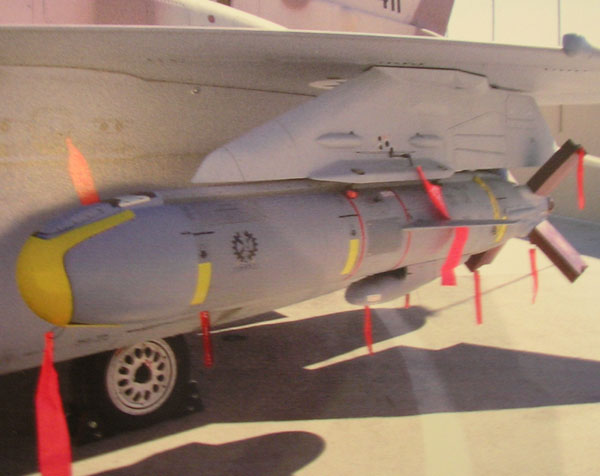
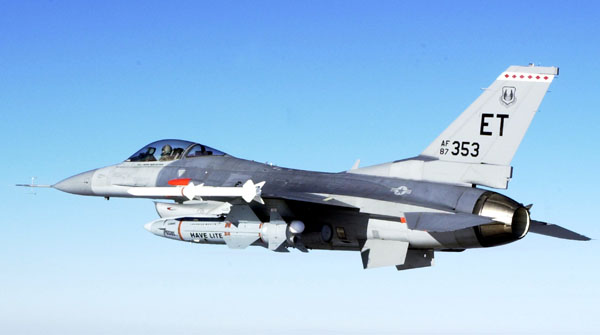
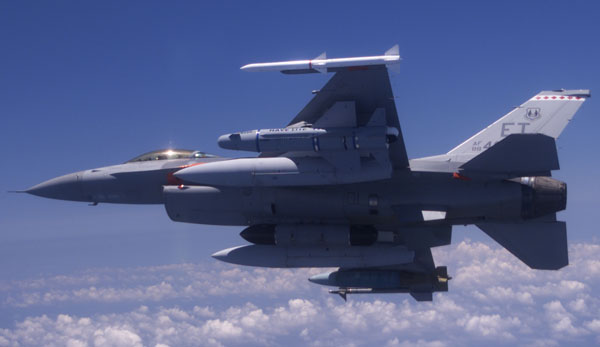
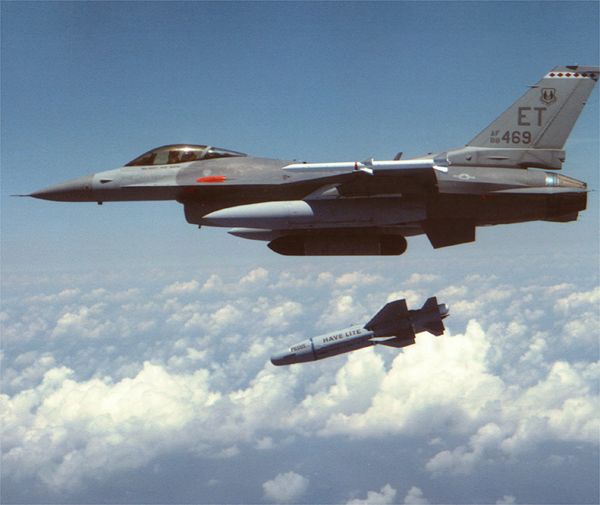
Popeye Lite (Have Lite)
Air-to-Surface Stand-Off Missile


Popeye AGM 142 missile


Spice
Stand-Off Precision Guidance Munition (PGM) Kit


Spice


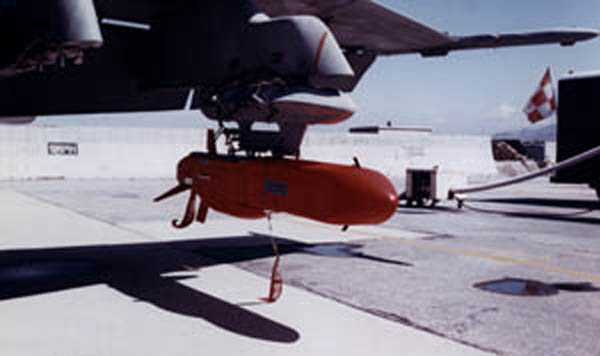
ITALD/TALD
Stand-Off Tactical Air Launched Turbojet-Powered Decoy


TALD


MSOV
Modular Stand-OFF Vehicle


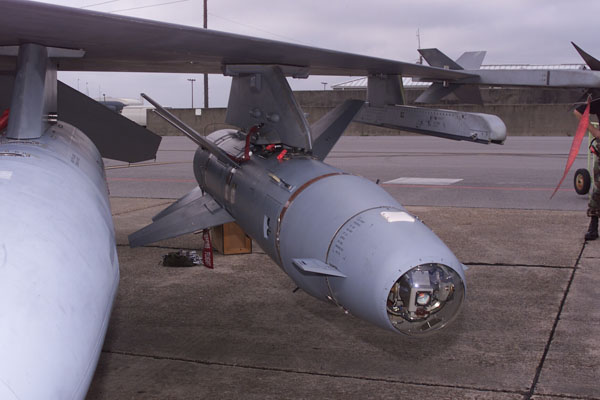
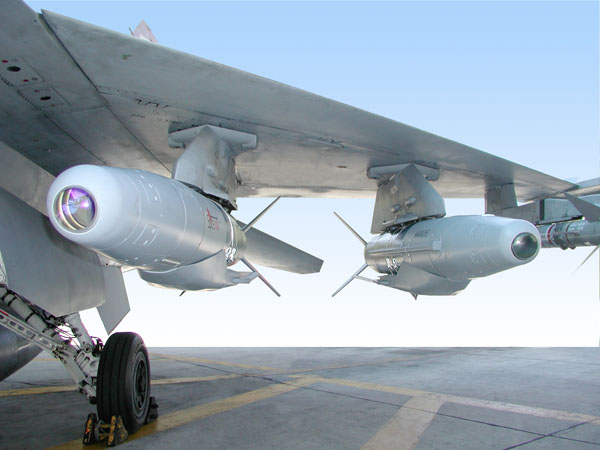
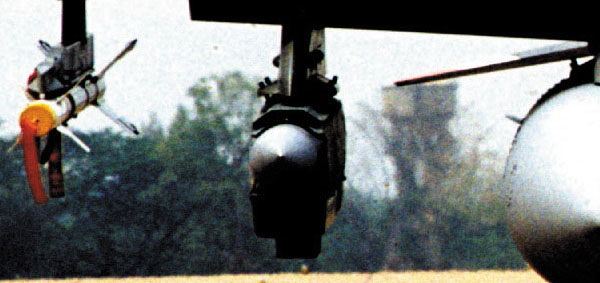
Litening
Day/Night Navigation and Targeting Pod


Litening


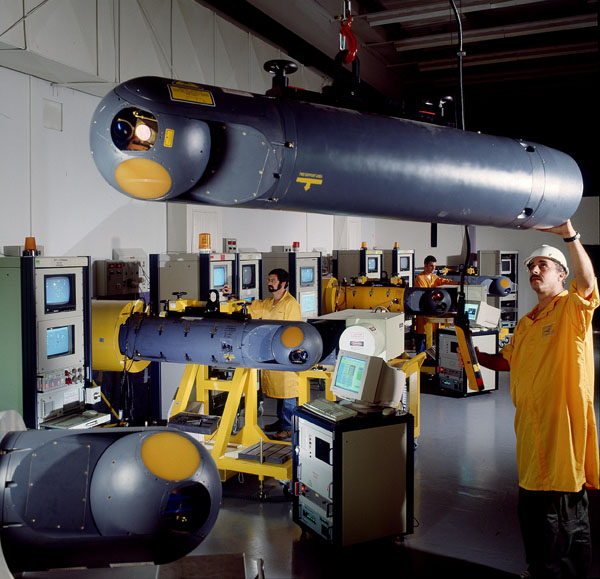
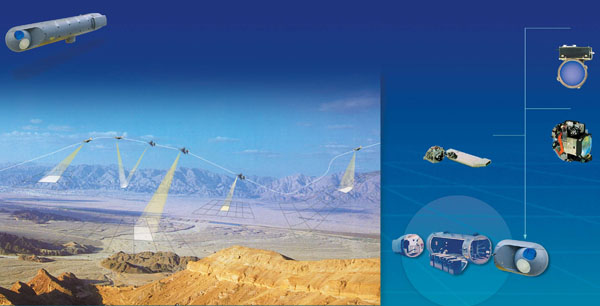
Litening is a combat-proven multi-spectral airborne targeting and navigation pod.  It is designed for navigation and target illumination to improve day and night attack capabilities.  Litening presents pilots with real-time, Forward Looking Infra-Red (FLIR) and Charge Coupled Device (CCD) imagery.  The high sensor resolution enables pilots to reliably identify the combat objects and consequently to avoid collateral damage.  It is fully operational 24 hours a day and in adverse weather conditions.

The sensors are incorporated in a single pod and provide the fighter aircrew with the flexibility to perform multiple missions/tasks including:

  • Laser spot detection enabling co-operative missions with target hand-over
  • Laser marking for co-operative missions with Night Vision Goggles (NVG)
  • Performance of low level night flights (navigation)
  • EO Point and Area Tracker & Inertial Tracker
  • Identification of aerial targets from Beyond Visual (BV) ranges
  • Detection/Recognition/Identification/Laser designation of surface targets
  • Accurate delivery of laser guided bombs; GPS guided munitions, cluster and general purpose bombs and reliable damage assessment
  • Integration capability to all Aircraft


Reccelite
Day/Night Electro-Optical Reconnaissance Pod


Reccelite


The RecceLite is a self-contained self-cooled multi-sensor tactical reconnaissance system, consisting of an airborne pod based on the Litening Targeting and Navigation Pod and a ground exploitation station.

The RecceLite simultaneously collects Infra-Red (IR) and Visual (VIS and near IR) digital images within a very wide field of regard, in accordance with an automatic mission plan and/or manual operation. The images and the data annotation are recorded on a solid state recorder and transmitted to the exploitation station via the RecceLite data link. The Images are then interpreted at the ground exploitation station.

The concept comprises a single pod system, with a single sensors payload having sensors in both IR (infrared) and VIS (visual and near infrared) wavebands, having three fields of view (FOV) in IR and four in VIS, and the capability to direct the line of sight of all sensors towards any direction in space (excluding aircraft obscurations).

The sensors are using large two-dimensional focal plane arrays (FPA) mounted on a 4-axis gimbals system, and images are captured by scanning with the gimbals, and taking snapshots of the targets area. The line of sight is accurately directed towards the targets area using an onboard inertial navigation system (INS), and motion compensation in all directions is achieved by locking the sensors line of sight on the region of interest (ROI) while capturing images. Motion compensation is using advanced inertial tracking and digital elevation maps (DEM) embedded in the pod.


Primary Role
Multi-role fighter
Original

USA

Dimensions
Wingspan - 9.45 m
Length - 15.03 m
Height - 5.09 m,
Wing area - 27.87 sq. m
Capabilities
Maximum speed - over Mach 2, Ceiling - over 15 km
Weight
Empty - 7,364 kg, Max. loaded - 16,057 kg
Power Plant
Pratt & Whitney F100-PW-200 engine with 6,654 kg. thrust
Weapon

Vulcan 6-barrel 20 mm. cannon with 515 rounds; air-to-air missiles and Iron/guided bombs.